// Workplace
Aluminum Facades for Offices and Workplaces
High-performance aluminum facade systems for office buildings and corporate workplaces - clean finishes, rainscreen assemblies, and the occupant experience that competitive office buildings require.
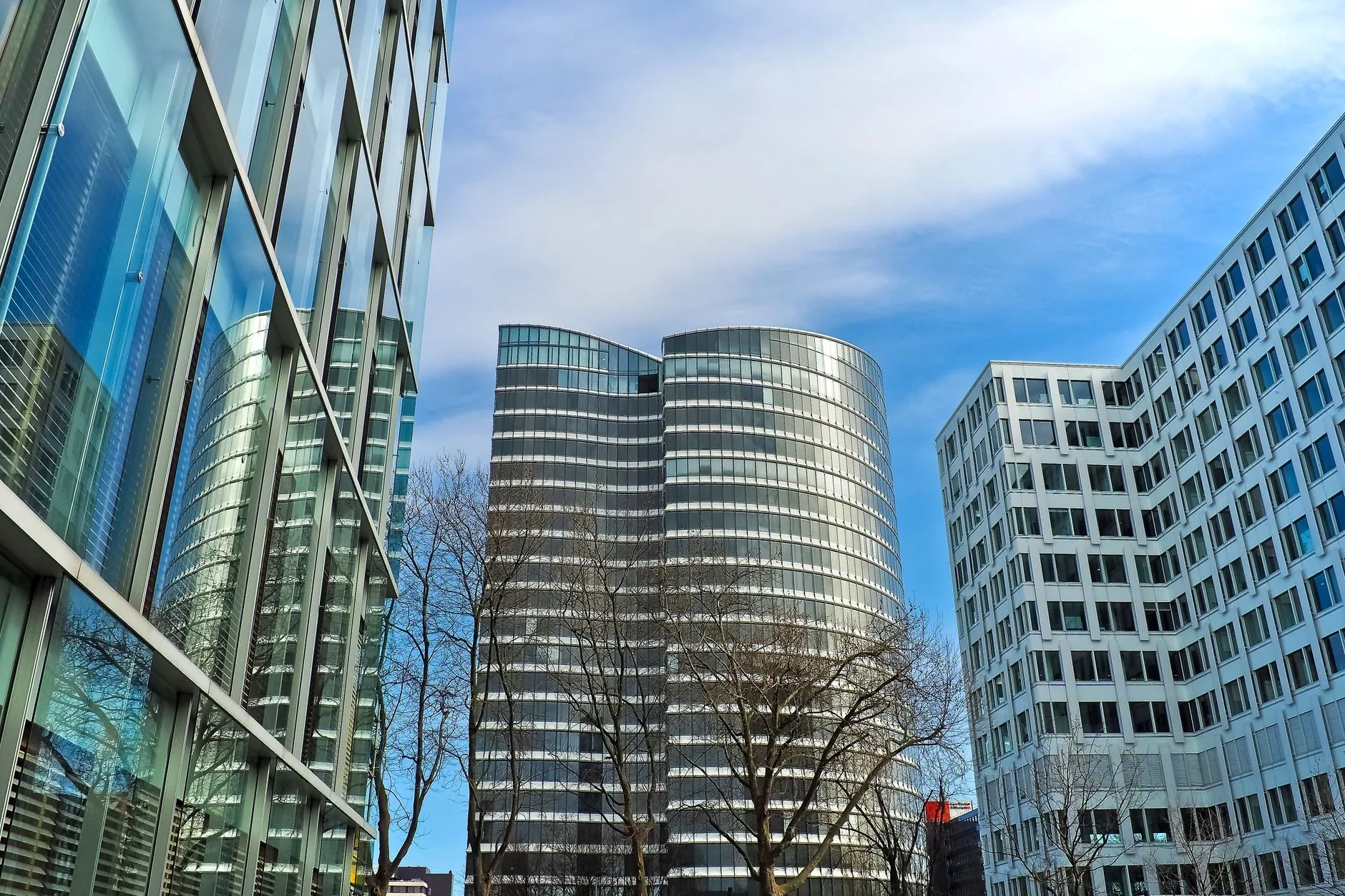
The office building market is more competitive than it has ever been. With tenants evaluating every square foot and ESG commitments shaping procurement decisions, the envelope has moved from a background detail to a front-of-brief item. Aluminum facades for offices address that shift directly - they deliver the visual quality, thermal performance, and long-term durability that make a building attractive to tenants and defensible for owners in a difficult leasing environment.
From corporate headquarters to multi-tenant speculative towers and boutique creative office buildings, an office building facade made from architectural aluminum sets a quality benchmark that the rest of the building has to match.
Why aluminum suits office buildings
The office building brief has expanded. Energy performance, indoor comfort, and building quality all land in the envelope, and aluminum systems are designed to address all of them.
- Tenant appeal. A well-detailed aluminum facade signals that the building is managed to a high standard - an increasingly important factor as tenants in a hybrid work environment compete for employees by offering better physical spaces.
- Thermal performance. Aluminum rainscreen assemblies reduce thermal bridging, manage bulk water, and contribute to the overall envelope performance that determines a building’s energy use intensity. That matters for operating cost and for ESG rating compliance.
- Finish quality. PVDF coatings and anodizing deliver surface quality that glass-and-aluminum architecture demands. The material holds its depth and precision over decades without the maintenance burden of alternative cladding systems.
- Design range. Office architecture ranges from minimalist curtain-wall towers to expressed-structure brick-and-panel mid-rise buildings. Aluminum adapts to all of them, from flush flush panels to articulated batten screens and textured finishes.
- Integration with glazing. Office buildings are heavily glazed, and aluminum cladding is designed to work alongside curtain wall and window wall systems within a unified facade language.
- Long service life. Institutional owners hold office buildings for decades. Aluminum cladding that maintains its quality over that period protects the asset’s value and avoids the capital expenditure of premature facade replacement.
Typical applications on an office building facade
Office buildings deploy aluminum across the full envelope and in several zones that each serve a distinct design and performance purpose.
- Tower cladding - the primary exterior surface for multi-story office buildings, where large-format panels provide a clean, consistent module that reads well at height.
- Podium and base levels - ground-floor commercial and lobby zones where a more robust, detailed cladding treatment responds to the pedestrian scale of the street.
- Feature and branding zones - entry cores, corner treatments, and signage zones where the design calls for architectural emphasis and premium finish quality.
- Solar control screens - batten or louver screens on south and west elevations that reduce solar gain without fully blocking views from occupied floors.
- Parapet and roofline - capping elements that complete the building’s profile and protect the roof edge from wind-driven water infiltration.
- Soffits and covered entries - finished undersides at lobby canopies and ground-level overhangs that set the quality tone at the building’s primary arrival point.
How systems are selected for office projects
Office building facade specifications are typically performance-driven, with requirements for wind resistance, air infiltration, water infiltration, and thermal performance that follow from the building’s climate zone and occupancy.
For tower floors and broad wall areas, aluminum panels deliver the dimensional precision and large-format quality that Class A office architecture requires. Where the design calls for depth, rhythm, and solar performance, aluminum battens add a screen layer that works on both single-skin and over-cladding applications. Aluminum wall cladding is well suited to podium levels and mid-rise buildings where efficient coverage is the priority. Aluminum soffits finish the lobby canopies, covered entries, and ground-floor overhangs that establish the building’s quality at arrival.
Our guide on aluminum cladding vs ACM panels addresses the fire performance, weight, and lifecycle cost trade-offs that frequently arise in office building facade specifications.
When you are ready to spec aluminum facades for offices, tell us about the project and we will help with system selection, thermal detailing, and fabrication.

// Start a project
Building for workplace?
Tell us about your facade and we'll help with system selection, finishes, and detailing.