// Transportation
Aluminum Facades for Transportation
Engineered aluminum facade systems for airports, transit terminals, and transportation hubs - spanning the large volumes, weathering the exposure, and meeting the public-facility performance codes these buildings demand.
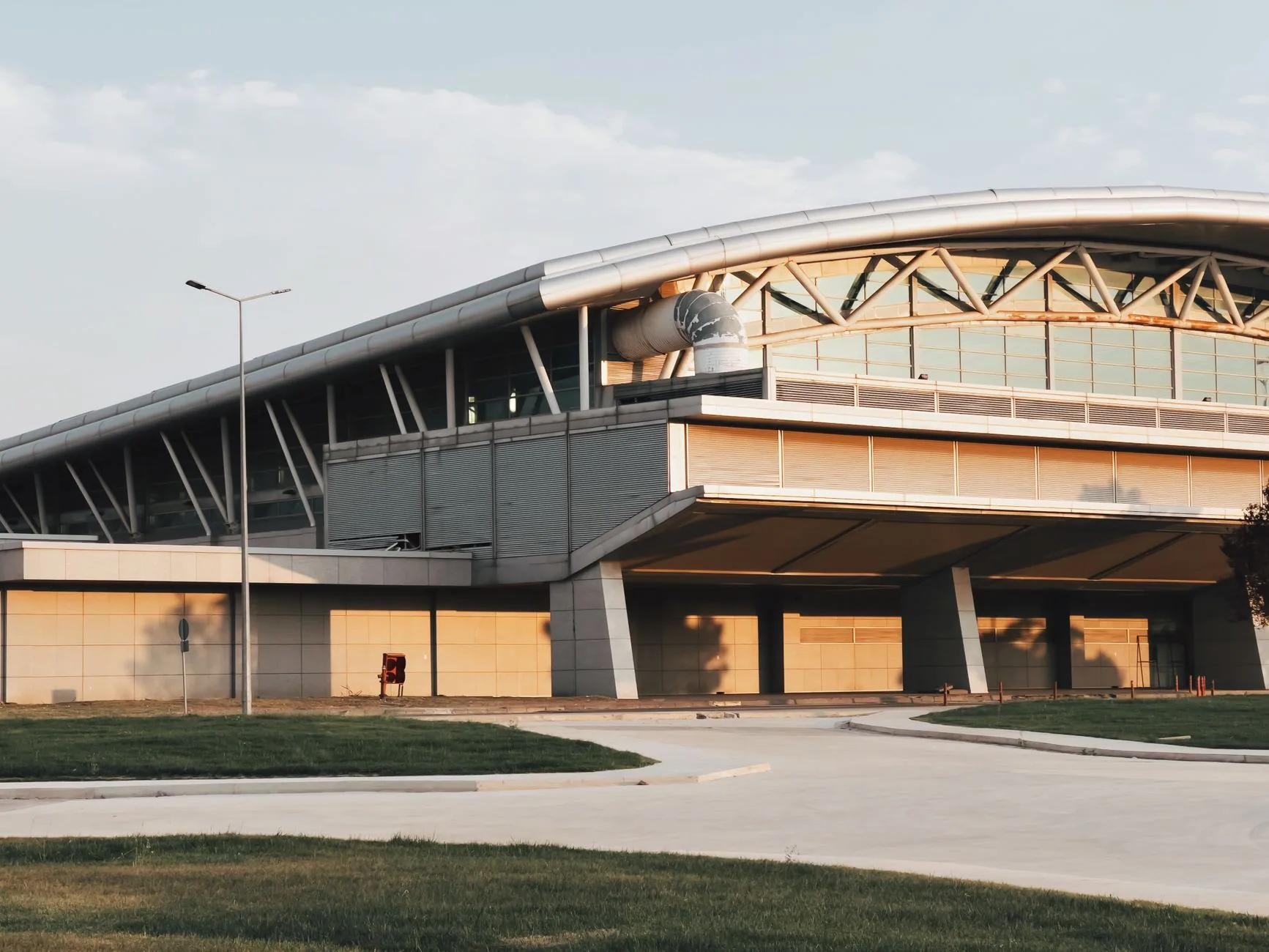
Transportation buildings are among the most technically demanding in the built environment. Airports, rail terminals, ferry terminals, and transit hubs operate continuously, carry enormous public loads, and face envelope exposure that few other building types experience - wind, rain, UV, thermal cycling, and the mechanical vibration of aircraft and heavy vehicles in close proximity. Aluminum facades for transportation are engineered to handle that environment while delivering the architectural scale and visual quality these landmark buildings require.
From regional airports to urban transit stations, aluminum gives structural engineers and architects the material they need to span large volumes, meet rigorous code requirements, and project the civic confidence that public transportation infrastructure demands.
Why aluminum suits transportation buildings
Transportation facilities are public infrastructure. They have to perform to a higher standard than commercial buildings - longer service life, more demanding weather exposure, and codes that reflect their critical-occupancy status.
- Structural efficiency at scale. Aluminum’s strength-to-weight ratio allows designers to span the large column-free volumes that airports and transit halls require without adding the dead load of heavier cladding materials.
- Weather resistance. Terminals and stations face driving rain, coastal salt air, freeze-thaw cycles, and constant wind pressure. Architectural aluminum handles all of these without corrosion, degradation, or loss of finish.
- Fire performance. Critical-occupancy transportation facilities have some of the most stringent fire codes in the building industry. Aluminum systems can be specified as tested, code-compliant cladding for these occupancy classifications.
- Thermal management. Large glazed volumes and extensive exterior surfaces make thermal performance a primary design concern. Aluminum rainscreen assemblies with insulated cavities reduce thermal bridging and help manage heating and cooling loads in buildings that cannot easily be taken offline for remediation.
- Acoustic performance. Aircraft noise, rail noise, and the ambient volume of large passenger halls make facade acoustic performance a meaningful design consideration. Dense aluminum panel assemblies contribute to exterior-to-interior acoustic attenuation.
- Maintenance at scale. Transportation facilities cover enormous surface areas. Aluminum’s low maintenance profile - clean, durable, and not requiring repainting - keeps the long-term cost of managing those surfaces manageable for public facility owners.
Typical applications on a transportation facade
Transportation buildings put aluminum to work at a range of scales, from the primary envelope to specialized technical components.
- Terminal and concourse facades - primary exterior cladding for the main passenger volumes, where the design often calls for long spans, expressive geometry, and high-quality finishes.
- Canopies and covered arrivals - vehicle and passenger drop-off zones that face the heaviest weather exposure and the highest visibility from the public realm.
- Connector links and jetways - enclosed pedestrian bridges and airside connectors where weather resistance and condensation management are primary performance concerns.
- Mechanical and plant enclosures - louvered and perforated screen panels for rooftop and ground-level plant that must allow airflow while maintaining the visual quality of the overall facility.
- Platform canopies - rail and transit station roof structures that shelter passengers from weather while managing drainage, wind uplift, and thermal expansion.
- Soffits - the finished undersides of canopies, covered walkways, and elevated roadways that face constant exposure and must resist moisture and biological growth.
How systems are selected for transportation projects
Transportation projects are procured through public processes with detailed technical specifications and long design-to-delivery schedules. System selection is typically driven by a formal performance specification that addresses wind loads, fire resistance, acoustic requirements, and service life.
For primary facade coverage at large scale, aluminum panels provide the dimensional precision and large-format quality that terminal and concourse architecture requires. Where the design calls for expressed structure and depth, aluminum battens add a screen layer that works on both interior and exterior surfaces. Aluminum wall cladding provides efficient coverage at ancillary and back-of-house zones. Aluminum soffits are essential on the covered outdoor areas and platform structures that are central to transit architecture.
Our guide on ventilated facade systems covers how a rainscreen assembly manages the moisture and thermal conditions that transportation buildings face at an amplified scale.
When you are ready to spec aluminum facades for transportation facilities, share the project details and we will help with system selection, load analysis support, and fabrication.

// Start a project
Building for transportation?
Tell us about your facade and we'll help with system selection, finishes, and detailing.